
Digital Product Passport (DPP)
The Digital Product Passport (DPP) creates transparency regarding the origin, materials, and lifecycle of products. It supports the circular economy, promotes recycling, and enables both businesses and consumers to make informed decisions. The European Union is advancing sustainable production processes and supply chain transparency with new directives. From 2027, the DPP will be mandatory for numerous industries, including the railway, defense, automotive, medical, battery, retail, and electronics sectors. In the future, companies will have to digitally provide comprehensive product information to meet legal requirements and remain competitive. As an experienced partner for RFID hardware system solutions, we support you in implementing your Digital Product Passports.
EU Regulations and Legal Aspects
Everything in Order
The introduction of the Digital Product Passport is a central measure by the European Union to promote sustainable production and transparent supply chains. The first mandatory DPPs will be introduced for batteries, textiles, and electronic devices. In the coming years, the regulation will be gradually extended to other product groups.
Companies should prepare early to meet legal requirements and secure competitive advantages.
EU Green Deal:
Aims to make Europe climate-neutral by 2050 and calls for more sustainable production and consumption processes
Ecodesign Regulation (ESPR):
Defines requirements for sustainability, material efficiency, and the circular economy
Battery Regulation (Battery Regulation 2023/1542):
Obliges battery manufacturers to introduce a DPP
Critical Raw Materials Act:
Ensures greater transparency regarding used materials and their origin
We have the solution
The Digital Product Passport with RFID
Rely on a future-proof and efficient solution for the DPP and effortlessly meet the requirements of EU regulations. Contact us to learn how our RFID technology can optimize your processes and create sustainable transparency.
Transparency & Sustainability
The DPP is a key instrument for a sustainable economy. It provides detailed information on materials, recyclability, and origin, enabling traceability along the entire supply chain. Companies benefit from structured data management that not only helps comply with regulatory requirements such as the EU Green Deal and the Ecodesign Regulation but also minimizes supply chain fraud. At the same time, the DPP enables consumers to make informed purchasing decisions and strengthens trust in sustainable products.
Technical Implementation of the Digital Product Passport
The introduction of the DPP is based on modern technologies for storing and retrieving product information:
- QR codes & Barcodes: Printed on the product or packaging for easy identification.
- RFID & NFC: Electronic memory chips enable contactless data retrieval.
- Blockchain technology: Tamper-proof storage of sensitive product information.
- Cloud databases: Centralized management and flexible data updates.
To ensure the DPP can be used uniformly across industries, standardized data formats and interfaces are employed:
- EPCIS (Electronic Product Code Information Services): Industry standard for supply chain traceability.
- GS1 Digital Link: Links physical products with digital information.
- ISO 14083: Uniform calculation and documentation of CO₂ emissions for improved environmental balance.
Thanks to these technologies, the DPP is efficiently implemented and enables seamless integration into existing business processes.
Our Solution for Future-Proof Identification with RFID & NFC
The Digital Product Passport is becoming a central requirement for sustainable supply chains and transparent product information. With our RFID Dual-Tags (UHF & NFC) and the PENsolid PRO, we offer a powerful solution to label products in a GS1-compliant manner and manage them efficiently.
Our dual tags enable contactless identification via RFID or NFC, allowing products to be uniquely tracked throughout their entire lifecycle. In combination with our PENsolid PRO UHF and the associated EPC Programmer App for Android, SGTIN, GIAI, and Digital Links can be easily and standard-compliantly written to a transponder.
Companies benefit from optimized product labeling, while consumers and partners can access relevant product information at any time – whether for traceability, repair, or recycling. Thanks to UHF technology, products can be read quickly in large quantities, while NFC enables direct interaction via smartphone. This combination makes our solution ideal for industry, logistics, and retail. The robust design of our transponders also ensures high durability – even in demanding environments.
Request a Solution Now
Reliable readers, TAGs, and sensor technology for demanding environments – from prototype to series production, with engineering support.
Find the right products now.
Products for the Digital Product Passport
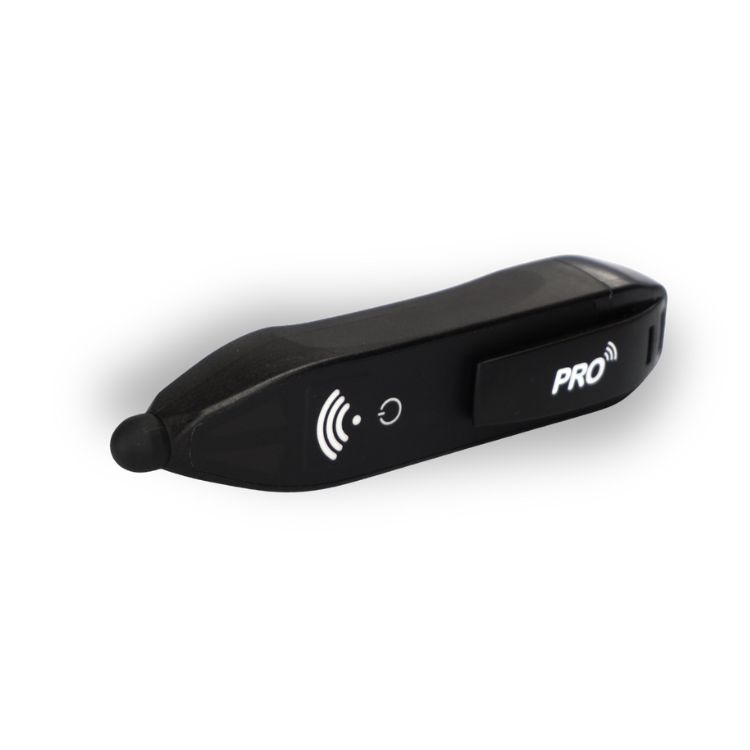
iID® PENsolid PRO
Mobile reader for labels, plates, and sensor transponders – ideal for miniaturized TAGs
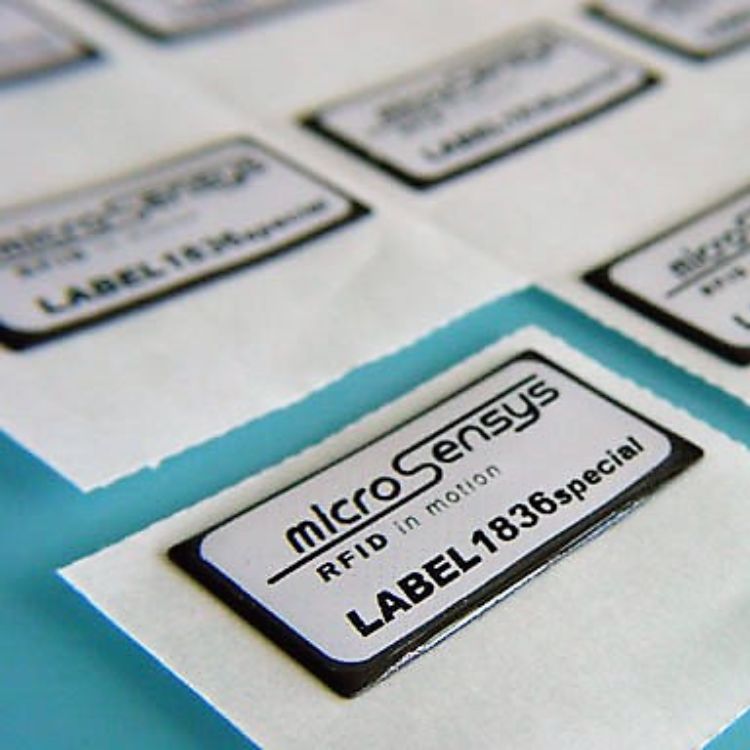
1836 DUAL Tag
HF and UHF in one self-adhesive label
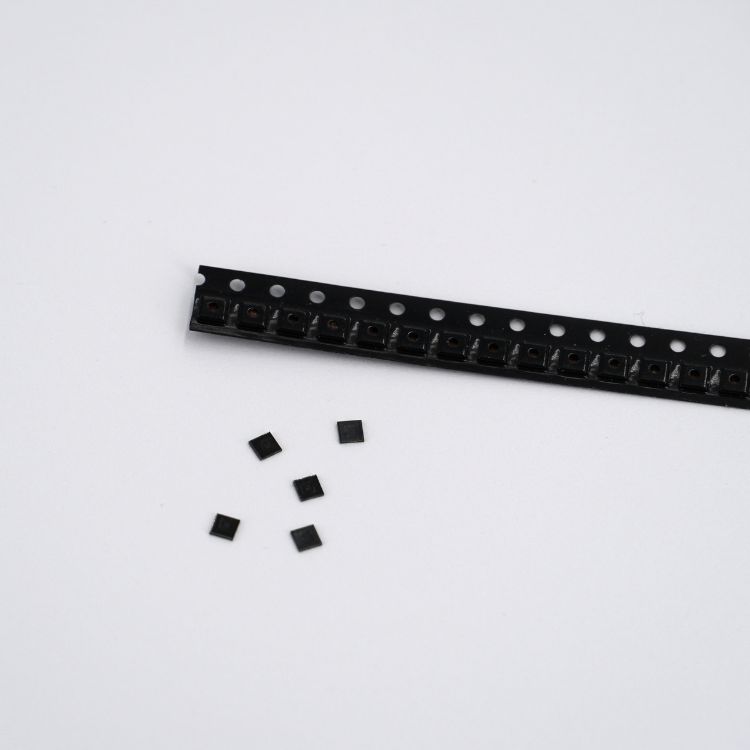
miniTAG Q2.5
HF, ultra-compact for smallest components and small animal identification